
Arturo Faldi (Florence, 1856 – Florence, 1911)
“Momenti Felici”
("Happy Moments")
Oil on canvas - 70 x 45 cm
Signed upper right
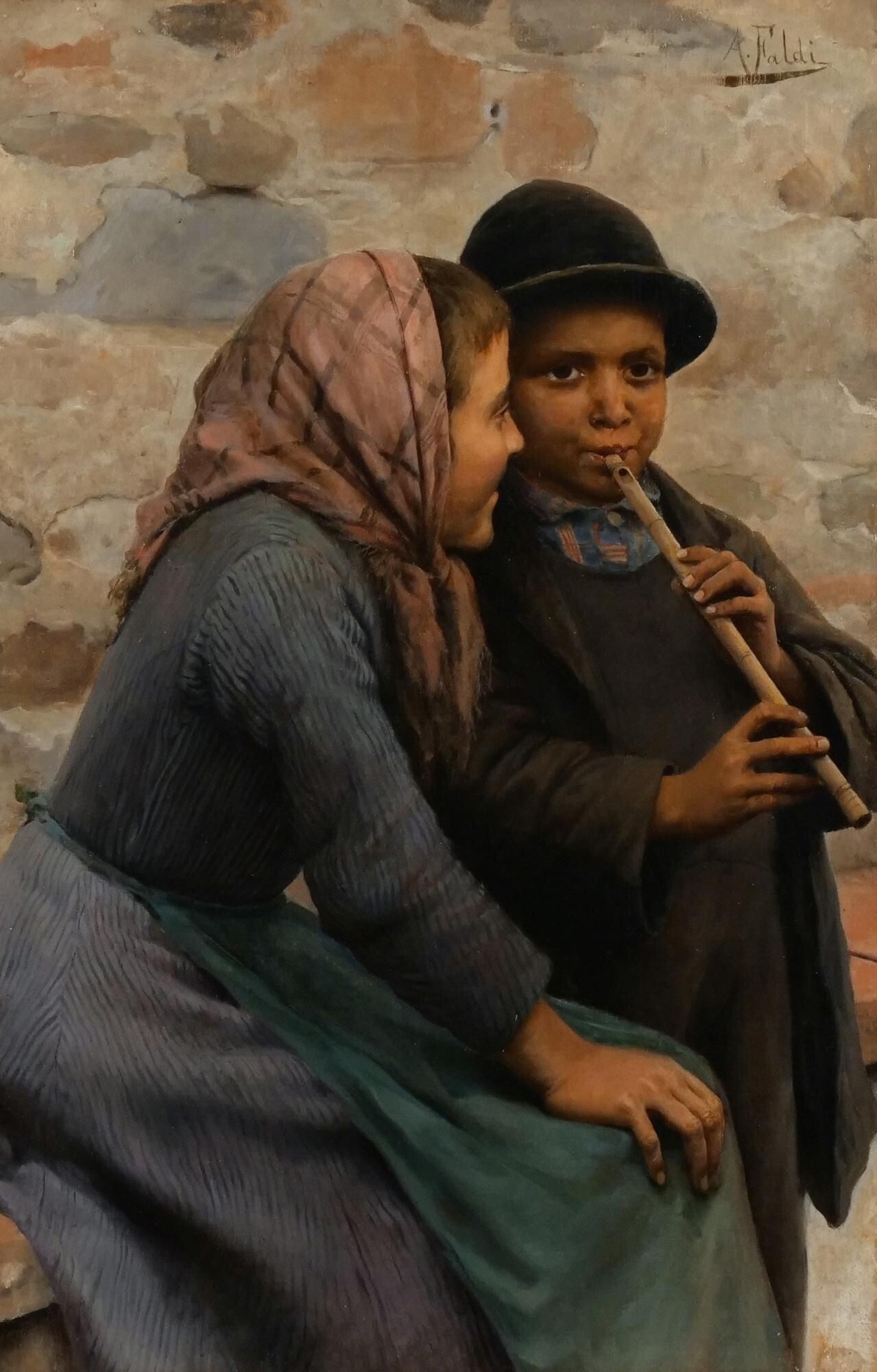
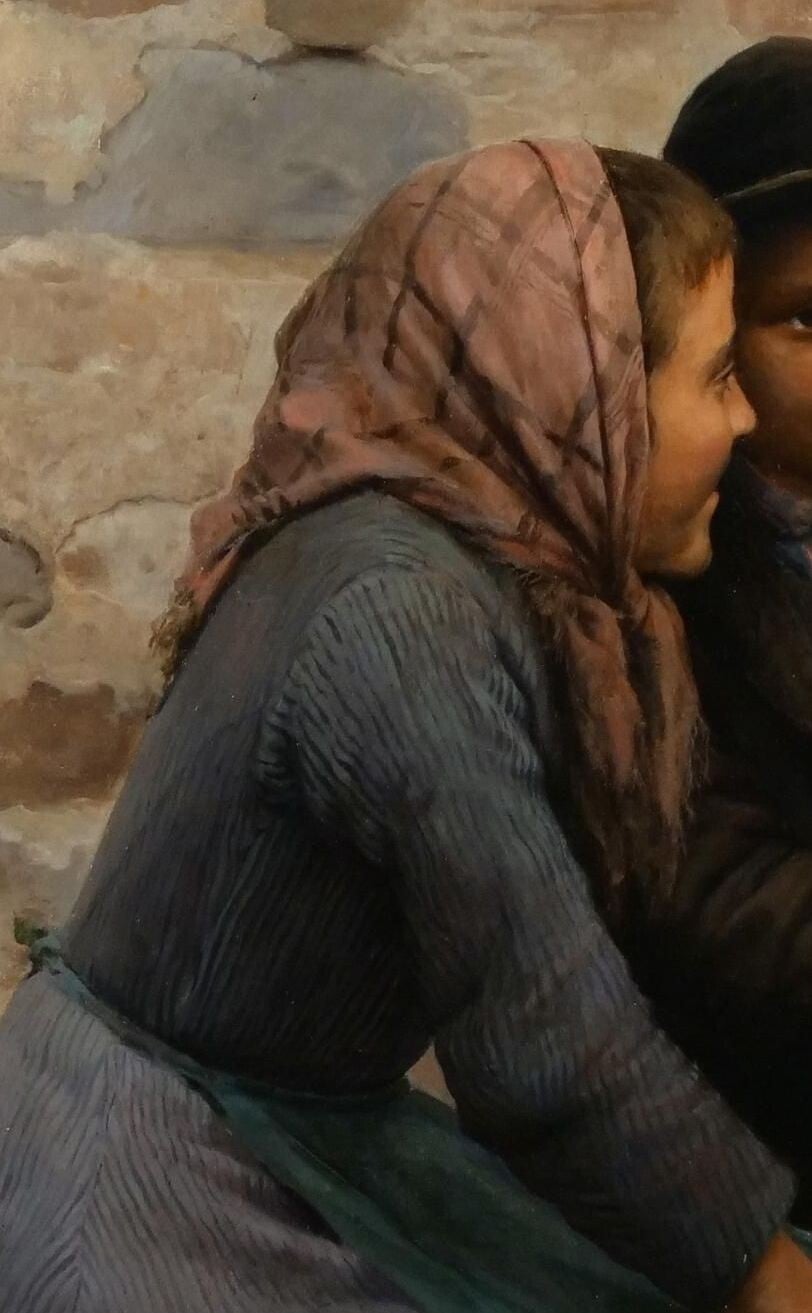
A reed flute played by a young peasant wearing a dark hat and the presence of an engaged female listener, wrapped in a kerchief and captured with the hint of a smile, define the scene of Momenti felici (Happy Moments, oil on canvas, 70 x 45 cm), a work by Arturo Faldi attributable to the culture of late nineteenth-century Tuscan Verismo. The Florentine painter structures the composition on a balance between fidelity to real-life observation and formal restraint, imparting naturalness to the rendering of the faces. The chromatic palette rests on earthy and neutral tones that complement the simplicity of the subject, while the stone wall in the background, rendered through an articulated variation of texture, defines the sculptural space without overburdening the visual narrative.
Trained in Florence under the guidance of Michele Gordigiani and Gaetano Muzzioli, Faldi stands among the key figures of the post-Macchiaioli movement. Following an early career dedicated to history painting and biblical subjects, around 1880 the artist initiated a shift in thematic direction, turning to the study of rural life and the Tuscan landscape. This evolution reflects the legacy of the Macchiaioli and a stylistic affinity with Silvestro Lega, from whom he borrowed a meticulous attention to the figure and rigor in observing the everyday. The work belongs to this phase of late Macchiaiolismo, in which the narration of peasant life converses with contemporary trends in European Naturalism.
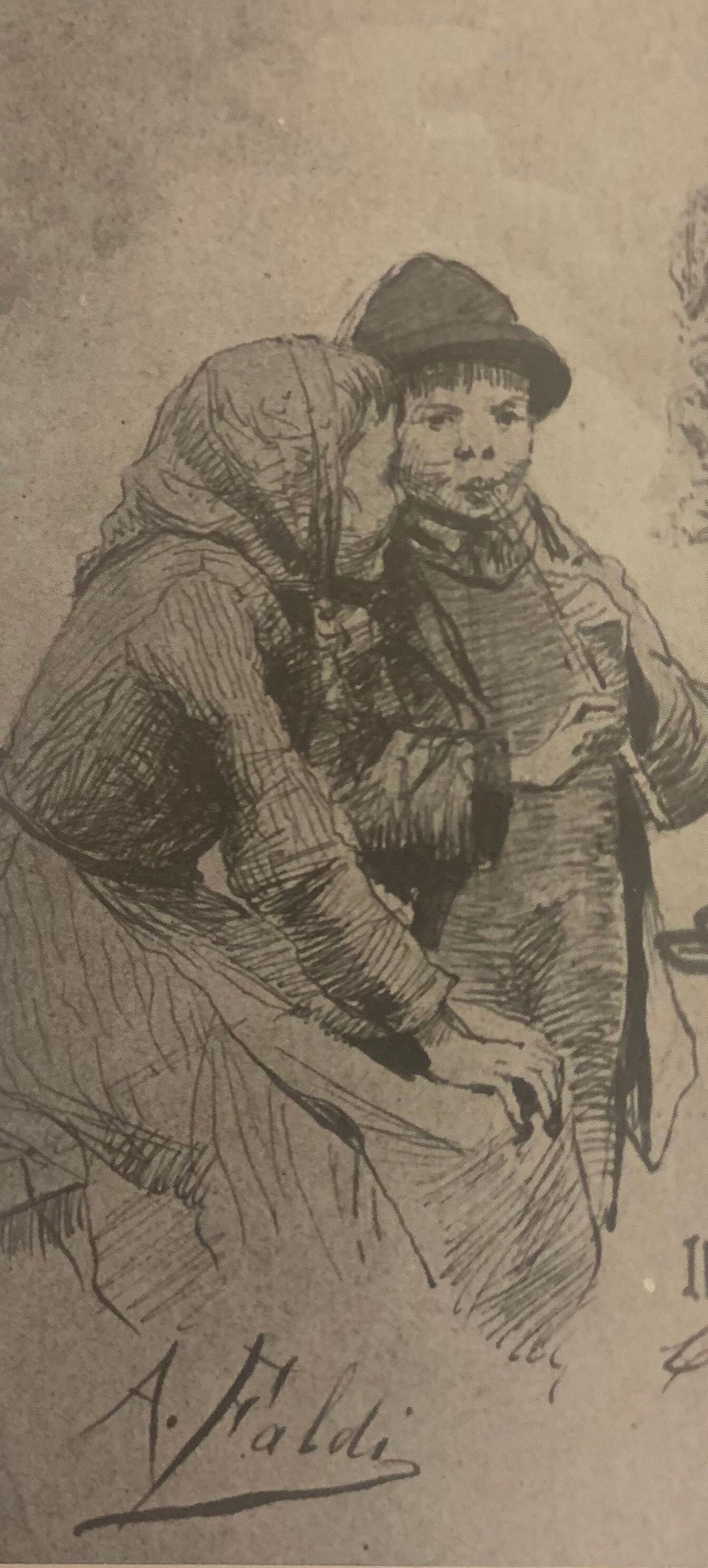
Documenting the compositional study preceding the execution on canvas is a small preparatory drawing for the work, historically documented and published in the volume edited by Bolaffi in 1979. This graphic record provides direct evidence of the artist's creative process, highlighting his work on the balance of volumes and the definition of the two protagonists' poses prior to the final painted execution.
The artist’s exhibition record testifies to his inclusion within the principal survey circuits of the era. Having already exhibited at the Paris Salon of 1881, Faldi was awarded medals at the Paris Universal Expositions of 1889 and 1900, receiving the gold medal in Berlin in 1896 for his canvas Inverno in Toscana. Momenti felici synthesizes this mature figurative idiom, grounded in the mastery of light and the depiction of the rural sphere, offering collectors a documented work representative of late nineteenth-century Tuscan painting.